The Quiet Shift That Made the Phone the Home of Online Casinos
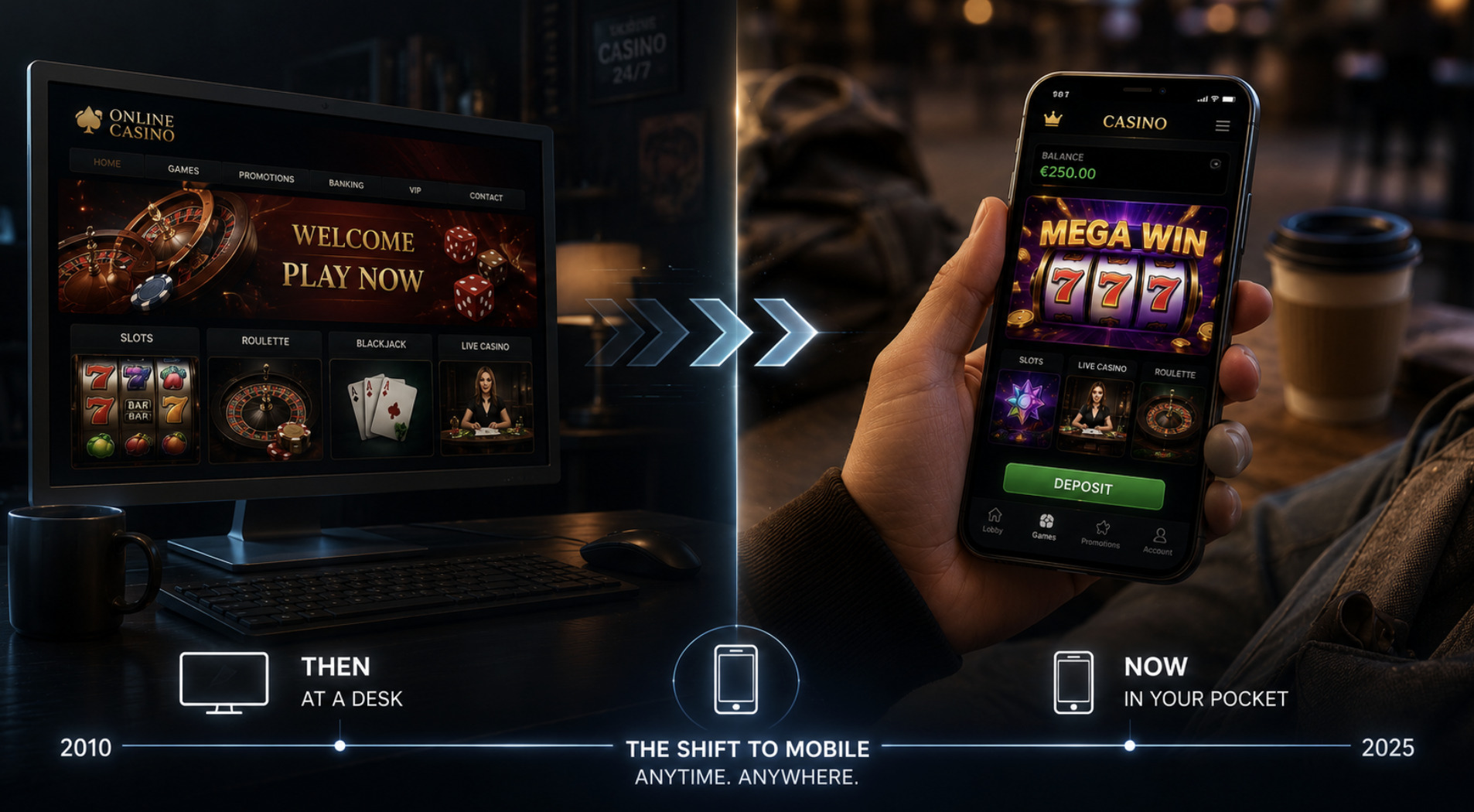
A decade ago, online gambling was something you did at a desk. You sat at a computer, opened a browser, and played. Today the centre of gravity has moved entirely: most online casino play now happens on a phone, often in the small gaps of a day rather than at a dedicated screen. This migration to mobile was not a single dramatic event but a gradual, near-total shift, and it has reshaped how games are designed, how sites are built, and how players actually behave. Understanding it explains a great deal about the modern online casino.
From desktop afterthought to mobile-first
In the early years of mobile gambling, the phone was an afterthought. Sites built for desktop were shrunk down to fit smaller screens, producing cramped, awkward experiences that worked but pleased no one. The turning point came when operators and game developers stopped treating mobile as a reduced version of the desktop and started designing for the phone first, then scaling up to larger screens if at all. This inversion — mobile as the primary platform rather than the secondary one — is the foundation of everything that followed.
The reason for the shift was simply where the players were. As smartphones became powerful and ubiquitous, and mobile connections fast enough to stream and load rich games, people naturally gravitated to the device already in their hand. Operators followed the audience. What began as a convenience became the default, and the desktop experience, once primary, is now the one that adapts to fit the mobile design rather than the other way around.
The technology that made it possible
Two technical developments underpinned the mobile takeover. The first was the maturation of web standards, particularly the move away from older browser plugins toward technologies that run games natively in a mobile browser with no installation required. This meant a player could open a slot or table game directly in their phone's browser, instantly, with no download — removing the friction that had held mobile play back. Games built this way work across devices and operating systems from a single codebase, which is why the modern mobile casino feels seamless.
The second was the sheer increase in the capability of phones themselves. Modern smartphones have the processing power, screen quality, and connectivity to render detailed graphics, stream live video, and handle complex interfaces smoothly. What once required a desktop now runs comfortably in a pocket. Together, these developments erased the technical compromises that had made early mobile gambling feel like a lesser experience, and allowed the phone to deliver something equal to, and in convenience superior to, the desktop.
How mobile changed game design
Designing for a small touchscreen imposes constraints that have reshaped the games themselves. Interfaces had to be rethought for thumbs rather than mouse pointers, with larger touch targets, simplified layouts, and controls reachable one-handed. Information that once sprawled across a wide desktop screen had to be distilled to what matters most, presented clearly on a vertical display. The best mobile casino design is an exercise in disciplined simplification.
Player behaviour on mobile also differs, and design has adapted to it. Mobile sessions tend to be shorter and more frequent — a few minutes in a queue or on a break rather than a long evening at a desk. Games and interfaces are built for these fragmented sessions, loading quickly, remembering where a player left off, and removing every unnecessary step between opening the app and playing. The whole experience is optimised for the interrupted, on-the-go rhythm of phone use, which is a fundamentally different context from the deliberate desktop session it replaced.
App or browser?
A recurring question in mobile gambling is whether to play through a dedicated app or directly in the phone's browser, and both approaches persist because each has merits. Browser play requires no installation, updates automatically, takes up no storage, and works instantly from a link — advantages that suit players who value convenience and do not want to commit space on their device. A great deal of modern mobile casino play happens this way, in the browser, precisely because it is frictionless.
Dedicated apps, where offered, can provide a slightly more integrated experience, with features like push notifications and a home-screen icon that make returning easier. Neither is universally better; the choice depends on how a player prefers to engage. Many operators support both, and some, such as Spookino, deliver the full experience straight through the mobile browser without requiring any download at all, which lowers the barrier for players who simply want to open a game and start. The trend overall favours making mobile access as immediate as possible, whichever route a player chooses.
The convenience-and-caution balance
The defining feature of mobile gambling is that the casino is now always within reach, and this is a double-edged quality worth naming plainly. On the positive side, it delivers unprecedented convenience: a player can enjoy a game whenever and wherever they like, fitting entertainment around their life rather than around a desk. For the vast majority, this is simply a benefit — more flexibility, less friction.
The same constant availability, however, removes the natural boundaries that a desktop imposed. When gambling required sitting down at a computer, there were built-in pauses and thresholds; when it lives in a device carried everywhere, those thresholds disappear, and play can bleed into moments where it might be better set aside. This makes the mobile context one where conscious limit-setting matters especially. Using the responsible-gaming tools that operators provide — deposit and time limits, reminders, and the ability to lock oneself out for a period — is the counterweight to the very convenience that makes mobile so appealing. The phone's accessibility is a genuine advantage, but it works best paired with deliberate boundaries.
Where mobile is heading
Mobile is no longer a segment of the online casino market; it is the market, and future development assumes it. New games are designed for the phone as the primary canvas, live casino streams are optimised for mobile screens and connections, and payment systems increasingly integrate with the mobile wallets and instant methods people already use on their devices. The direction of travel is toward an experience that is entirely native to the phone rather than adapted to it.
What this means for players is that the mobile experience will continue to improve in speed, quality, and integration, closing any remaining gap with desktop and, in most respects, surpassing it in convenience. The desktop will not vanish, but it has become the secondary screen. For anyone trying to understand where online gambling is going, the answer is already in their pocket — and the operators who thrive will be the ones who treat the phone not as one option among several but as the place where the experience truly lives.
Conclusion
The move to mobile is the defining shift of the modern online casino, and it happened quietly, through a steady accumulation of better technology and changing habits rather than a single leap. Phones grew powerful enough to run rich games, web standards let those games run instantly in a browser, and design was rebuilt around thumbs, small screens, and short sessions. The result is a casino that fits in a pocket and is available at every moment — a convenience that is genuinely valuable and that also makes deliberate limits more important than ever. The desk is no longer where online gambling lives. The phone is, and everything about the experience now flows from that simple, complete transformation.